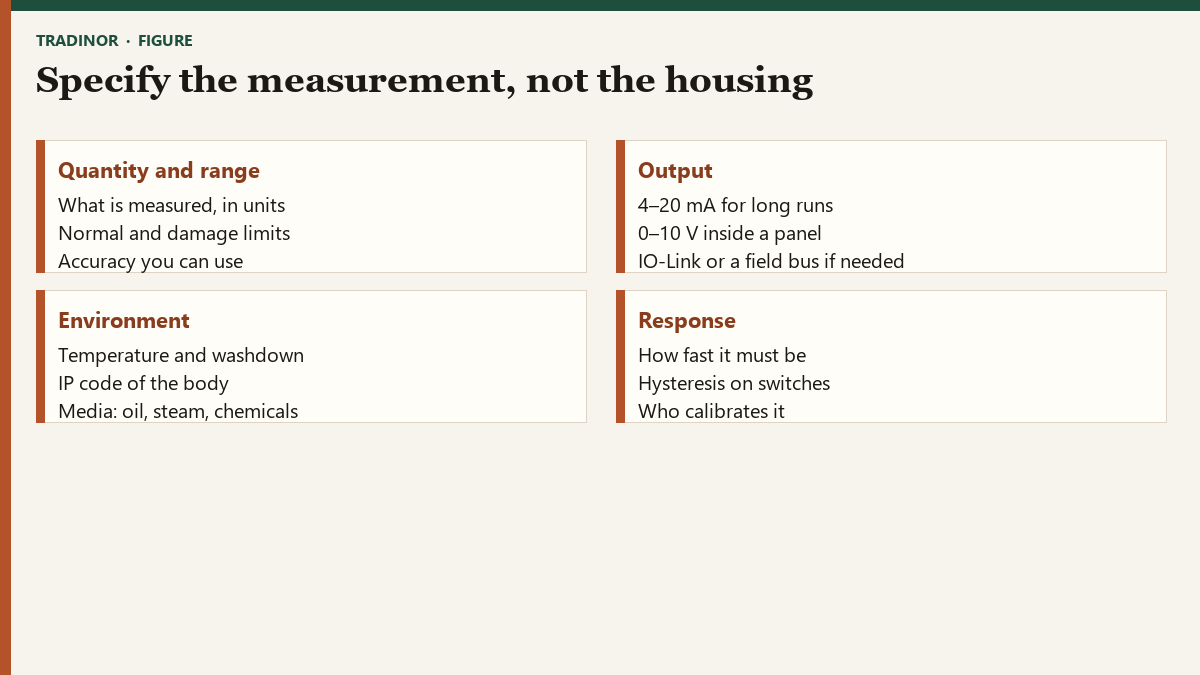
Pressure, temperature, humidity, proximity, and photoelectric sensors are bought as if the housing color were the specification. A good RFQ starts with the physical quantity and the range, including the overload the sensor must survive without lying afterwards.
Match the output to the cable, not to a trend
On a machine, a 4–20 mA transmitter is still the sober choice for a sensor that sits meters from the panel. A 0–10 V output is fine for a short run inside the same cabinet. A raw I²C or SPI chip belongs on the PCB next to the converter, not at the end of a factory cable. IO-Link and field buses help when you need diagnostics and many devices on one trunk; they are extra complexity when you need one pressure value.
Switches and transmitters are different orders
A proximity sensor that only closes a transistor is a switch. Specify sensing distance, target size and material, hysteresis, and whether the output is PNP or NPN so it matches the PLC input. A pressure or temperature transmitter that produces a continuous signal needs accuracy, temperature drift, and a statement of whether the accuracy includes the total error or only a best-case lab number. Humidity sensors drift. Plan a replacement or a calibration interval instead of assuming the first percentage on the label lasts forever.
| Sensor | Write these on the RFQ |
|---|---|
| Pressure | Range, overload, media, port thread, output |
| Temperature | Range, probe length, RTD or thermocouple type, or transmitter output |
| Proximity | Technology, distance, target metal, PNP or NPN, flush mount |
| Photoelectric | Through-beam, retro, or diffuse; range; background suppression |
Washdown and outdoor use are enclosure and material questions. Cite the IP test you need, which is explained in the IP and ATEX guide, and name the chemical if the sensor face will see it. “Food grade” and “waterproof” are not test results.
Questions buyers actually ask
Why do plants still use 4u201320 mA?
A current loop resists electrical noise and voltage drop over a long cable better than a small voltage signal. It also lets a technician see a live zero: 4 mA means the sensor is present, 0 mA means the wire is open. Use it when the sensor is remote. On the same board as the converter, Iu00b2C or a voltage is simpler.
Is a proximity sensor the same as a photoelectric sensor?
No. Inductive proximity sensors detect metal at short range. Capacitive sensors can detect other materials. Photoelectric sensors use a light beam and can reach farther, but dust, steam, and shiny targets fool them. The target material belongs in the specification.
Does IP67 make a sensor accurate?
No. IP67 describes dust and temporary immersion of the housing, under IEC 60529, for the conditions in the test. Accuracy, drift, and chemical compatibility are separate lines on the datasheet.